
The robot gets 96% right. Who owns the exceptions?
Google DeepMind's new factory pilot raises a human question: who catches, corrects and learns from the work automation cannot finish?
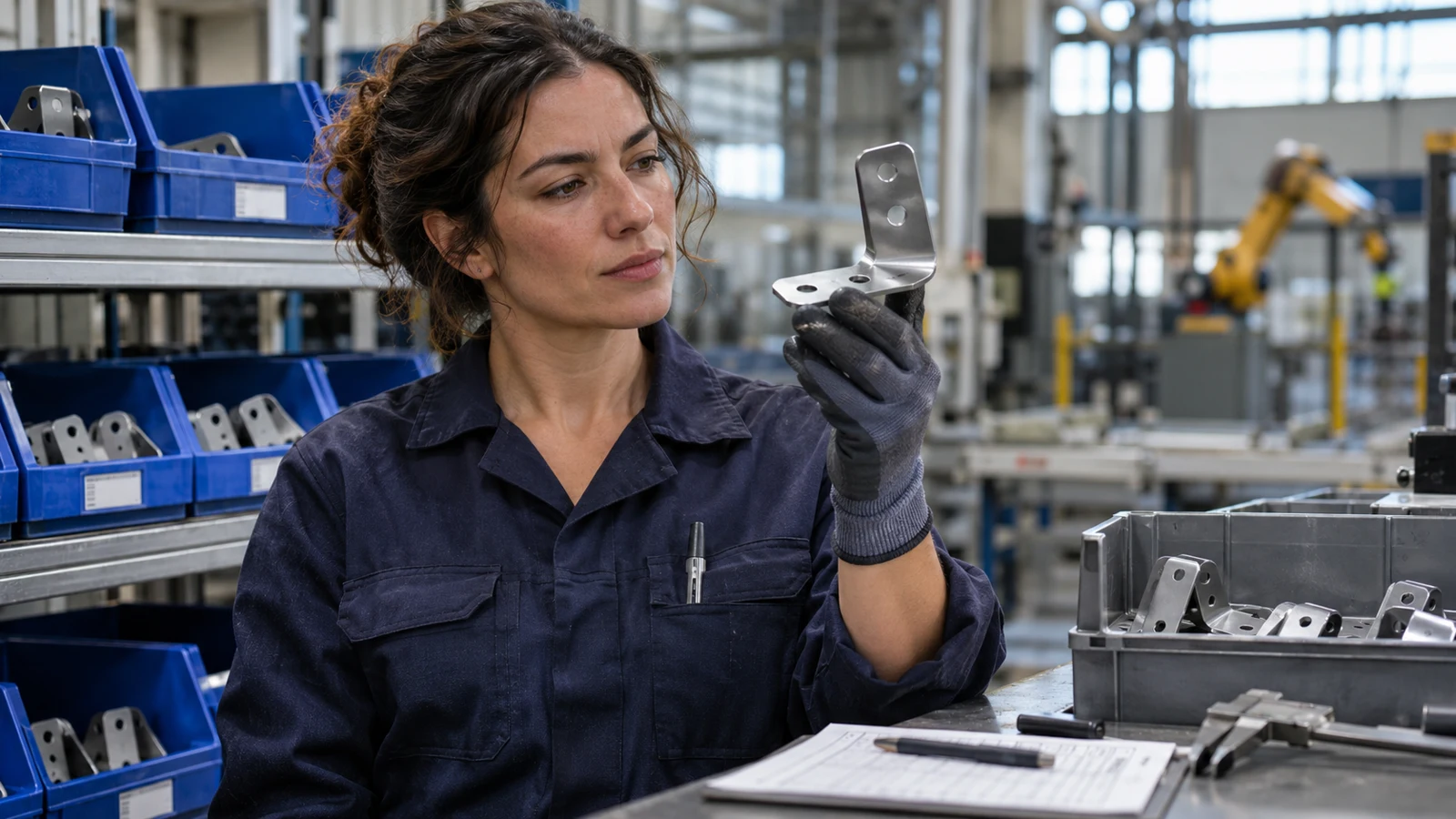 Pumpkin frame / 01
AI-generated editorial illustration, not a photograph of the reported pilot: someone still owns the exception.
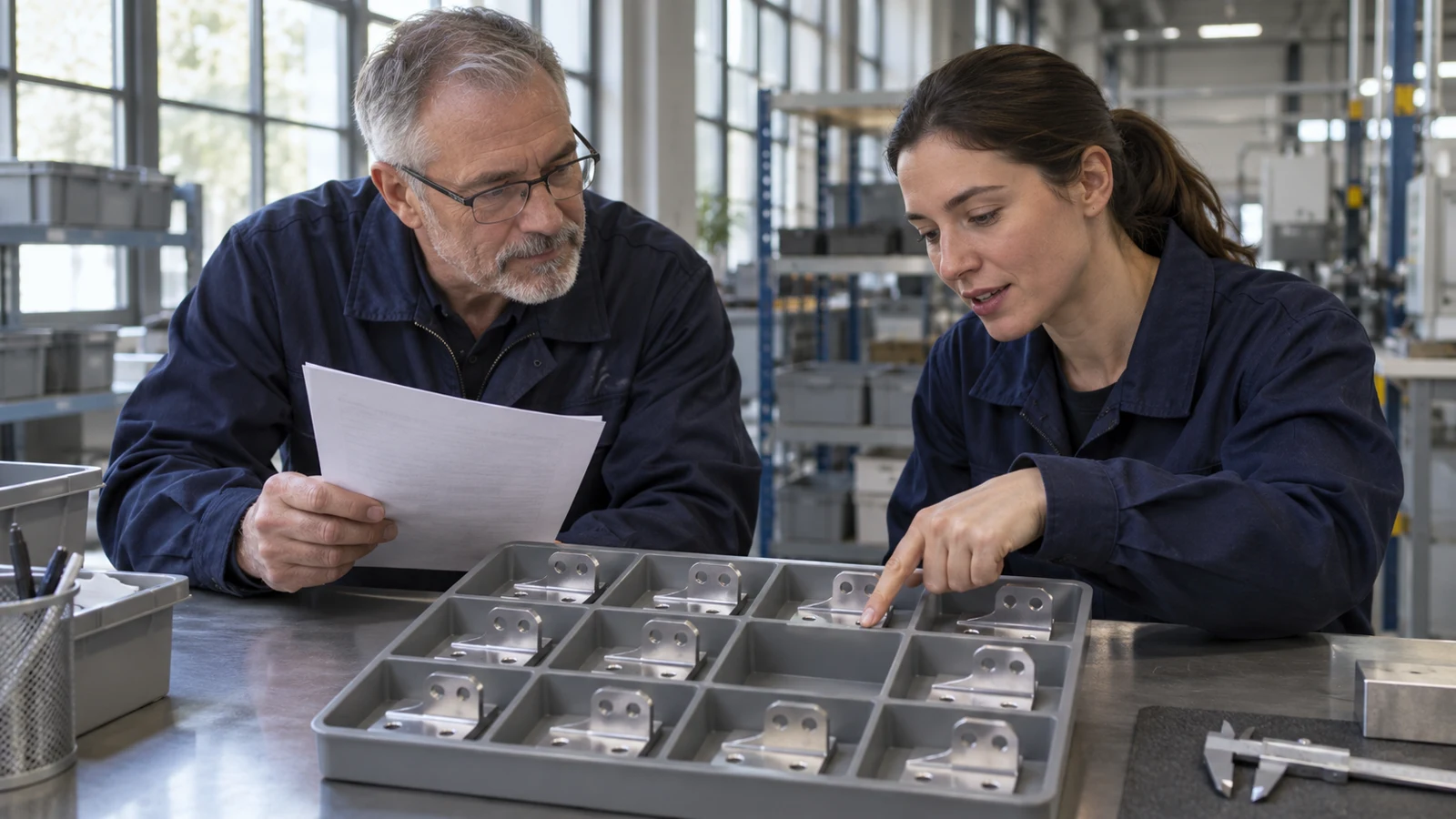 Pumpkin frame / 02
AI-generated editorial illustration with generic equipment: recovery is work that needs time and an owner.
Start with the person beside the machine
Imagine a technician arriving at a station with a tray that is almost right. Most parts are present. One bracket is missing, or a part needs another inspection. This is a hypothetical scene, not a reported incident from the pilot. It makes the central question visible: someone must decide whether work can continue, what needs correcting and how to prevent the same interruption tomorrow.
The impressive part of an automation announcement is easy to film. A machine reaches, grasps and places. The less visible work is deciding what counts as finished. That distinction matters to the person whose next task depends on the tray, and to the colleague expected to intervene without slowing everything else down.
What the announcement actually establishes
DeepMind describes a system that turns visual information and instructions into physical action. Its November announcement also reports testing across more than 200 tasks. Those evaluations and the automotive pilot have different scopes; they should not be collapsed into one claim that a robot can do every job with the same reliability.
The linked primary announcement is the source for the pilot figures here. We have not independently audited its results. It does not establish a general consumer launch in India, a staffing forecast, or a guarantee of uninterrupted operation at another factory. Any business decision would need evidence specific to its own task, equipment and working environment.
A percentage is not a job description
A success rate compresses a complicated operation into a small number. Before applying it elsewhere, a reader needs to know what was counted: an individual movement, a completed tray, an attempt after a retry, or an entire sequence. The headline alone cannot answer those questions. Nor can it reveal how long recovery takes or how many people must remain available to help.
There is a useful arithmetic distinction. In an illustrative set of 100 comparable attempts, 96 successes leave four non-successes. That does not mean four injuries, four defective cars or four lost jobs. The consequences depend on the failure, how it is detected, and what the surrounding system does next. Treating every non-success as a disaster is as misleading as treating every success as proof that supervision is unnecessary.
For a worker, the practical concern may be workload rather than a single headline about replacement. If the straightforward tasks disappear but every difficult exception arrives at one desk, the remaining job may become more demanding. That is a possible design problem to examine, not an observed outcome we can attribute to this pilot.
Give the exception an owner before it happens
Our proposed test for a responsible deployment is simple: can the team explain, in ordinary language, who notices a problem, who may stop the process and who decides that it is safe to resume? Those are three different responsibilities. A warning that everyone can see may still be a warning that nobody owns.
Consider a hypothetical supervisor asked to keep output moving while also investigating repeated mis-sorts. If recovery time is treated as a personal failure, useful information may never reach the people improving the system. If recovery is planned work with enough time and a clear escalation route, the same interruption can become evidence. The difference is organizational, not merely technical.
This is not a claim about the management practices at the named production sites. It is an accountability framework for readers assessing any automation proposal. Ask for a recovery demonstration as well as a successful demonstration. Ask what happens when the object, lighting or sequence differs from the expected case. Ask how workers can challenge an instruction without being blamed for the delay.
Workers need a role in defining useful
An automation project can be useful for more than one reason: less repetitive handling, fewer awkward movements, more consistent preparation or time for skilled work. It can also impose new burdens. A fair evaluation would look at both sides instead of assuming that a task removed from one column automatically becomes a better job in another.
The people performing and supervising a task can often identify the exceptions that a tidy demonstration leaves out. Their contribution should be visible in the evaluation: which interruptions are common, which are genuinely dangerous, and which merely look unusual to an observer? This is a reason to include practical experience, not a claim that experience makes measurement unnecessary.
For employees reading the news, the distinction between a task and a role is especially important. A role includes coordination, judgment, maintenance, communication and responsibility as well as repeatable actions. A successful demonstration of one action does not settle the future of that whole role. Equally, it would be careless to promise that no roles will change. The evidence here supports neither sweeping reassurance nor sweeping alarm.
The story worth telling is the recovery
For filmmakers and brand communicators, there is a temptation to make the machine the only protagonist. But the more revealing scene may be a person deciding what to do when the expected sequence breaks. A close-up of a technician inspecting one part can communicate the stakes more honestly than a montage suggesting that an entire workplace has become autonomous.
A truthful campaign should distinguish a real deployment, a controlled demonstration and a fictional illustration. It should also avoid turning a limited result into a universal promise. The images accompanying this article are original AI-generated editorial illustrations with fictional people and generic equipment; they are not photographs of the reported pilot or evidence of its performance.
Pumpkin AI's view is that the human question gives the technology story its meaning. The interesting promise is not that people vanish from the frame. It is that useful work becomes easier without making responsibility disappear. Until a deployment can explain its exceptions as clearly as its successes, a headline percentage remains the beginning of the conversation.
Questions worth asking.
Does 96% success mean the robot is safe in every workplace?
No. A task-success figure is not a universal safety guarantee. The scope, environment, failure detection and recovery arrangements must be evaluated separately.
Does this announcement prove workers are being replaced?
No. A pilot result does not establish a staffing outcome. This article distinguishes potential changes to tasks from evidence about employment.
Can every business buy this capability today?
The announcement describes a robotics-partner rollout, not unrestricted availability to every business. Confirm current access and suitability directly with the provider.
Are the article images real factory photographs?
No. They are original AI-generated editorial illustrations with fictional people and generic equipment, not photographs of Mercedes-Benz, Apptronik or Google's pilot.
Sources and further reading.
Related Pumpkin AI intelligence.

Need to act on the signal?