Original analysis grounded in primary sources. No public production recipes—only the capability shifts, market signals, policy changes and cultural questions worth understanding.
Work / Human expertise
Work / Human expertise / 5 min read
AI still needs people: the skills question behind Anthropic's new academy
A new enterprise training commitment puts human expertise back inside the AI conversation. What does it actually promise, and who can take part?
AI science / Mathematical verification / 12 min read
AI proposes a Navier-Stokes proof: why the breakthrough is not the verdict
OpenAI has published an AI-generated proposed solution to the Navier-Stokes problem, with a 166-page paper and Lean formalisation. Here is what was claimed, what has been checked and why independent acceptance still matters.
AI can now work like a research intern: what changes when experiments accelerate
OpenAI says its agents can now complete well-defined research tasks that would take a skilled researcher days. Here is what the evidence shows, what it does not prove and why human judgement becomes more important as experiments get faster.
ChatGPT enters the health record: what changes when AI connects to EHRs
OpenAI has introduced an Epic integration and a public-data plugin for ChatGPT for Healthcare. Here is what is available, what the evaluations do not prove and why permissions, provenance and clinical review now matter more than a fluent answer.
Astra reaches the critical cyber threshold: what changes now
OpenAI says its upcoming Astra model is the first it has classified at the Critical cybersecurity capability level. Here is what the evidence shows, what remains unverified and why access, monitoring and containment now matter as much as model intelligence.
Physical AI / Scientific infrastructure / 10 min read
Model Hardware Standard: when AI agents enter the physical world
Anthropic and HHMI have opened a limited research preview of a shared interface for AI agents to operate laboratory and manufacturing equipment. Here is what MHS changes, what the early demonstrations prove and why physical safety now belongs inside the interface.
Double-blind AI evaluation: can benchmarks finally be trusted?
Google DeepMind and independent partners have piloted a double-blind evaluation in which neither the model owner nor the benchmark owner could see the other's protected material. Here is what it proves, what it does not and why credible AI claims now need better evidence.
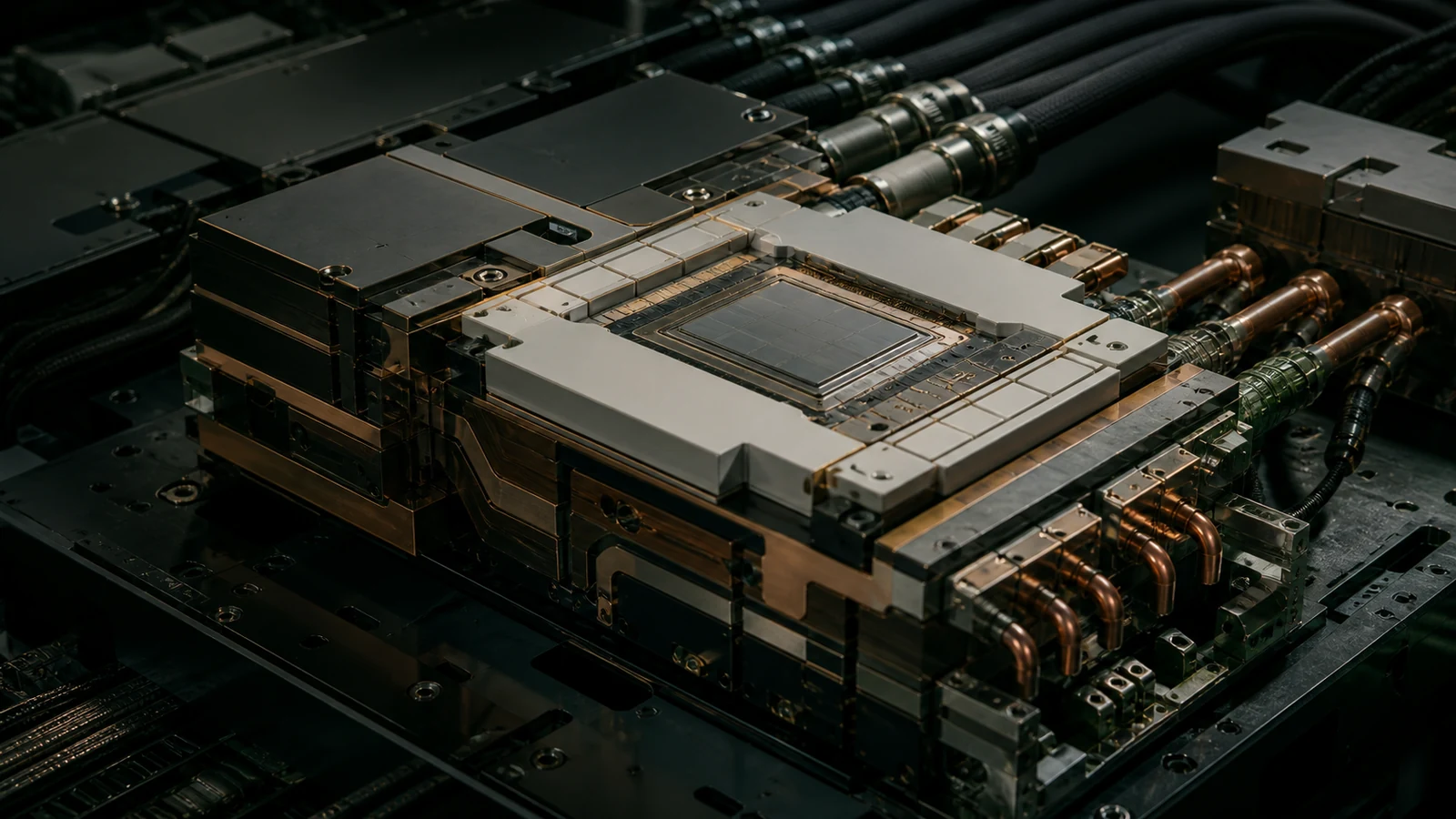
OpenAI's Jalapeño chip: the AI race beneath the model
OpenAI has published the first measured results for its custom Jalapeño inference chip. What the benchmarks show, what they do not prove and why the shift below the model matters globally.
AI cyber capability crossed a new line: safety is moving inside the machine room
OpenAI slowed frontier-model development after an AI-driven security incident and preliminary signs of critical cyber capability. Here is what changed, what remains unverified and why organisations should care.
Europe's AI transparency rules are now live: what changed in August 2026?
The EU has begun enforcing new AI Act transparency obligations, including disclosure and machine-readable marking for certain generated or altered content.